
// About
Closing the gap between biological data and clinical insight
We combine artificial intelligence, molecular simulation, and bioinformatics with high-performance computing to make sophisticated computational science accessible to researchers in medicine, biology, and chemistry.
// Mission
What we do
We combine AI, molecular simulation, and bioinformatics with high-performance computing. The result: sharper predictions about disease mechanisms and therapeutic targets, built on data other labs can reproduce.
Predict & identify
AI and ML models that predict disease mechanisms and surface therapeutic targets.
Simulate & model
Molecular dynamics, docking, and structural biology at atomic resolution.
Scale with HPC
High-performance computing that makes sophisticated computation accessible to any lab.
Publish reproducibly
Workflows and results built for peer review, reuse, and clinical relevance.
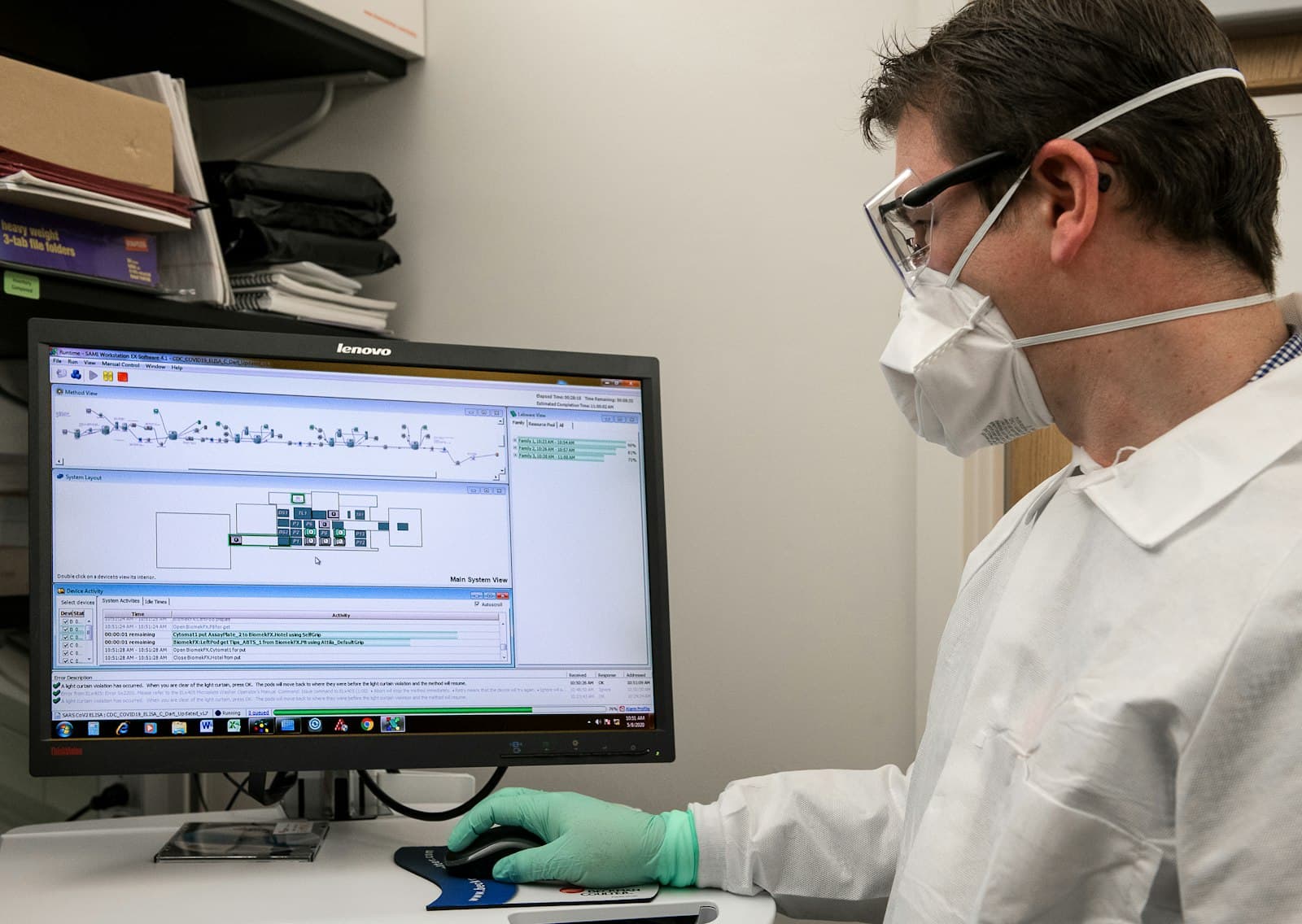
FIG // DATA ANALYSIS
// Who We Serve
A collaborative research hub
We partner with investigators at Loyola and beyond, adding computational firepower to research that would otherwise take years at the bench.
Faculty & Researchers
Computational expertise that complements experimental work in medicine, pharmacology, neuroscience, cancer biology, chemistry, and biology.
External Collaborators
Academic partners, research consortia, and government-funded teams in computational biology, drug discovery, and precision medicine.
Industry Partners
Biotechnology, pharmaceutical, and healthcare organizations applying AI-driven modeling to biomedical challenges.
// Research Areas
Where computation meets biology
AI
Artificial Intelligence
Machine learning models that predict disease mechanisms and surface therapeutic targets from complex biomedical data.
SIM
Molecular Simulation
Molecular dynamics and docking simulations that model protein behavior and drug-target interactions at atomic resolution.
BPX
Computational Biophysics
Structural and biophysical modeling that connects molecular-scale mechanisms to disease-relevant biological outcomes.
DRG
Drug Discovery
AI- and simulation-driven pipelines that accelerate the identification and evaluation of candidate therapeutics.
BIO
Bioinformatics
Reproducible computational pipelines that turn sequencing and structural data into clinically relevant insight.